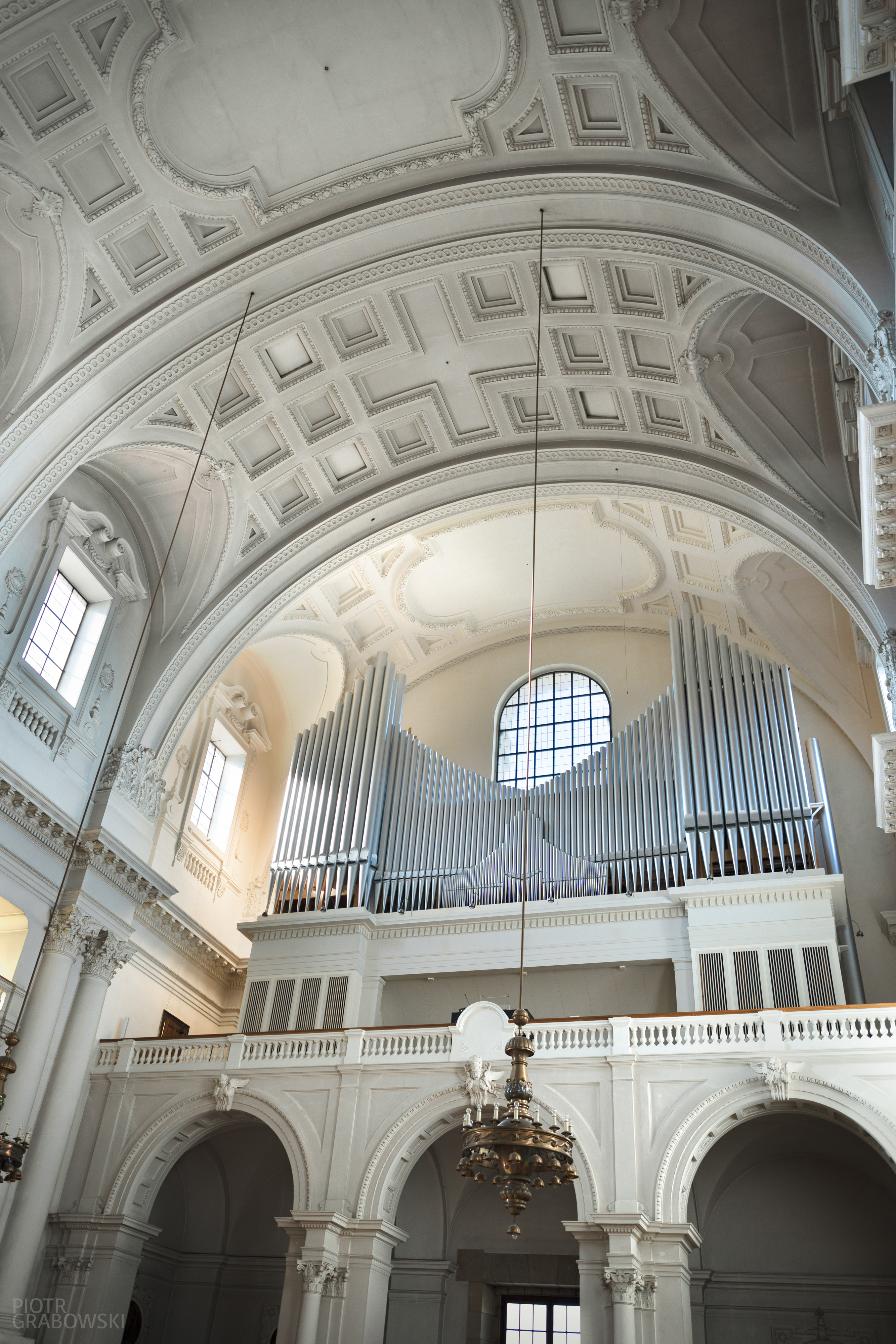
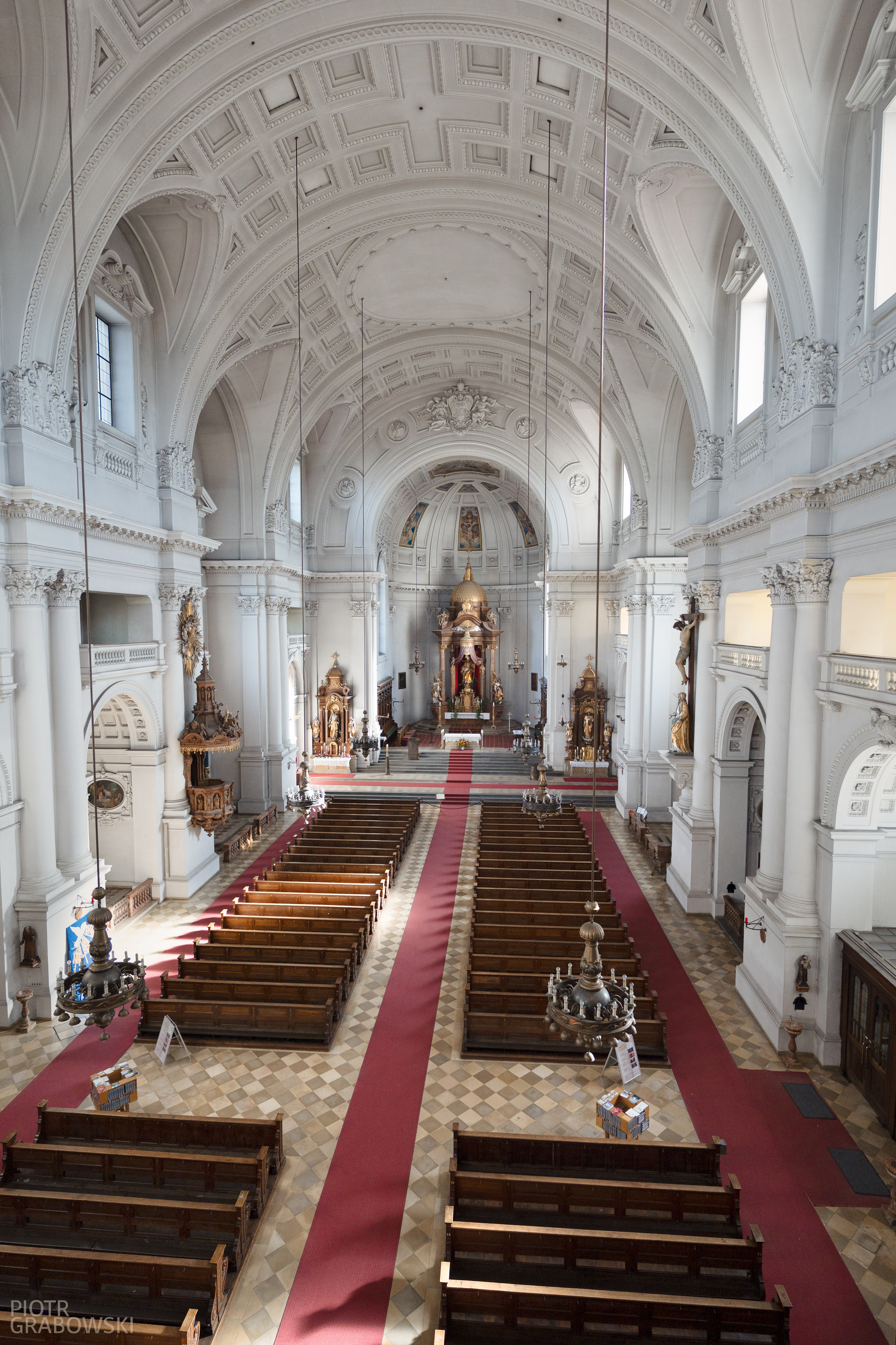
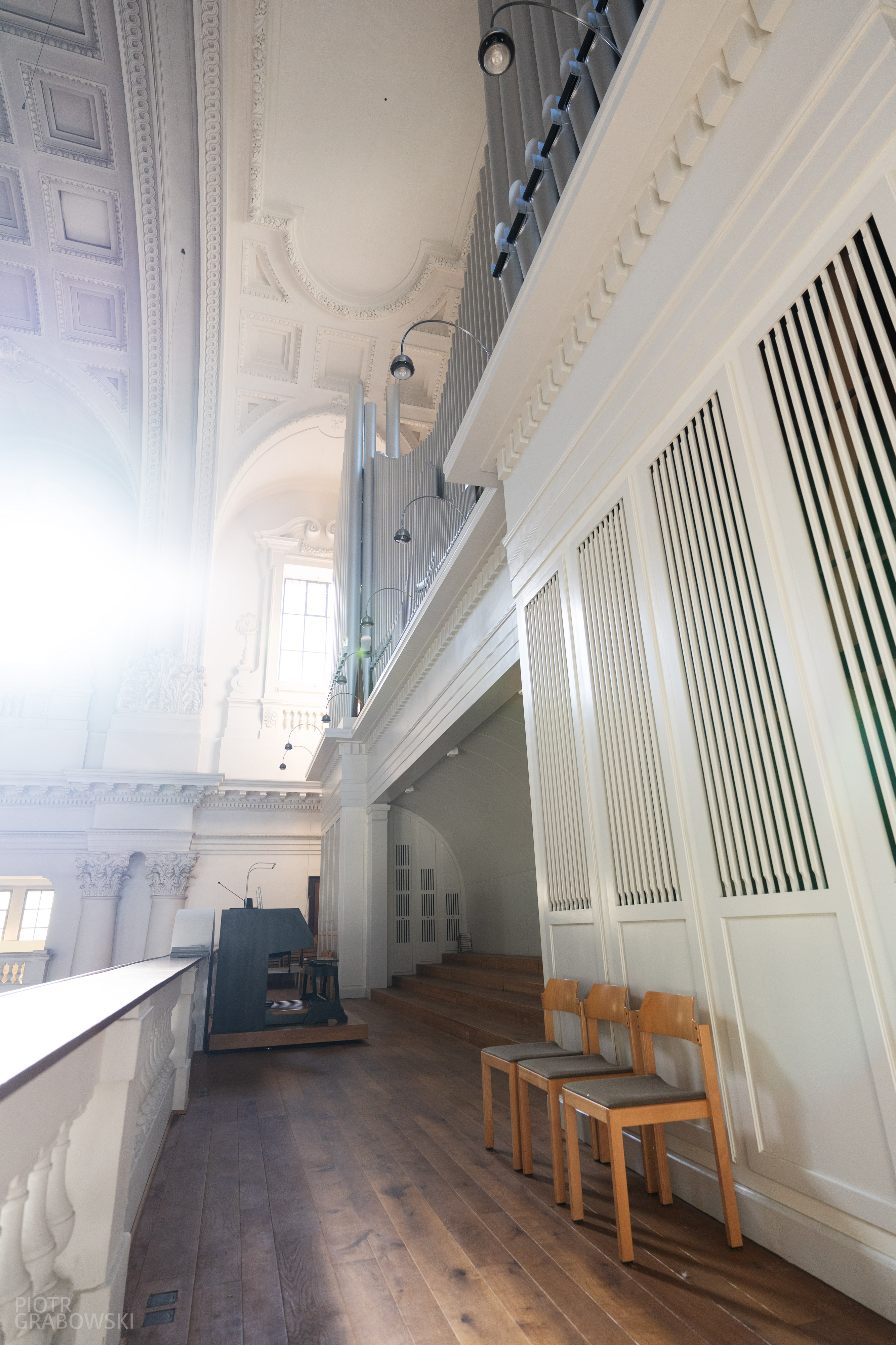
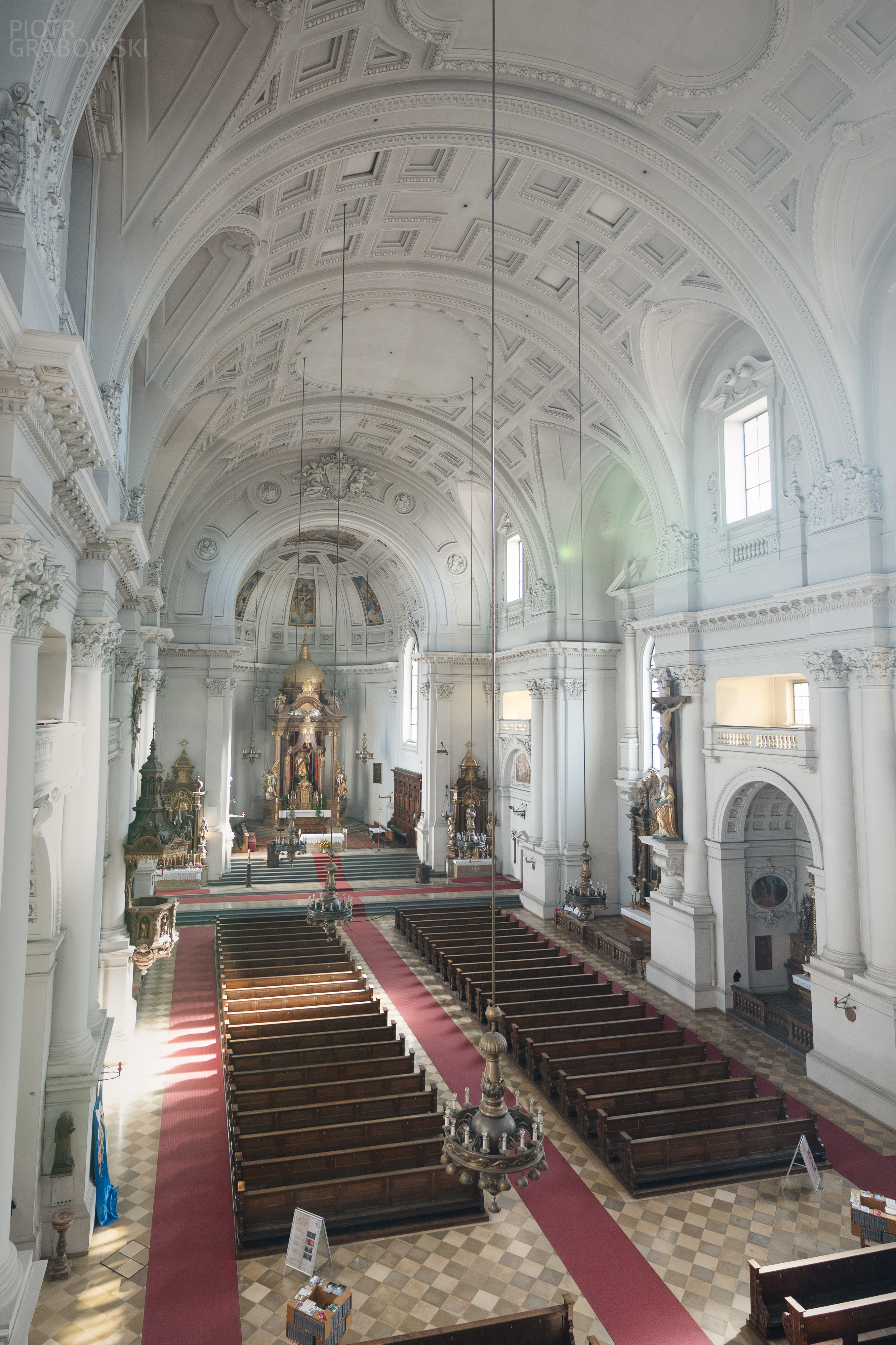
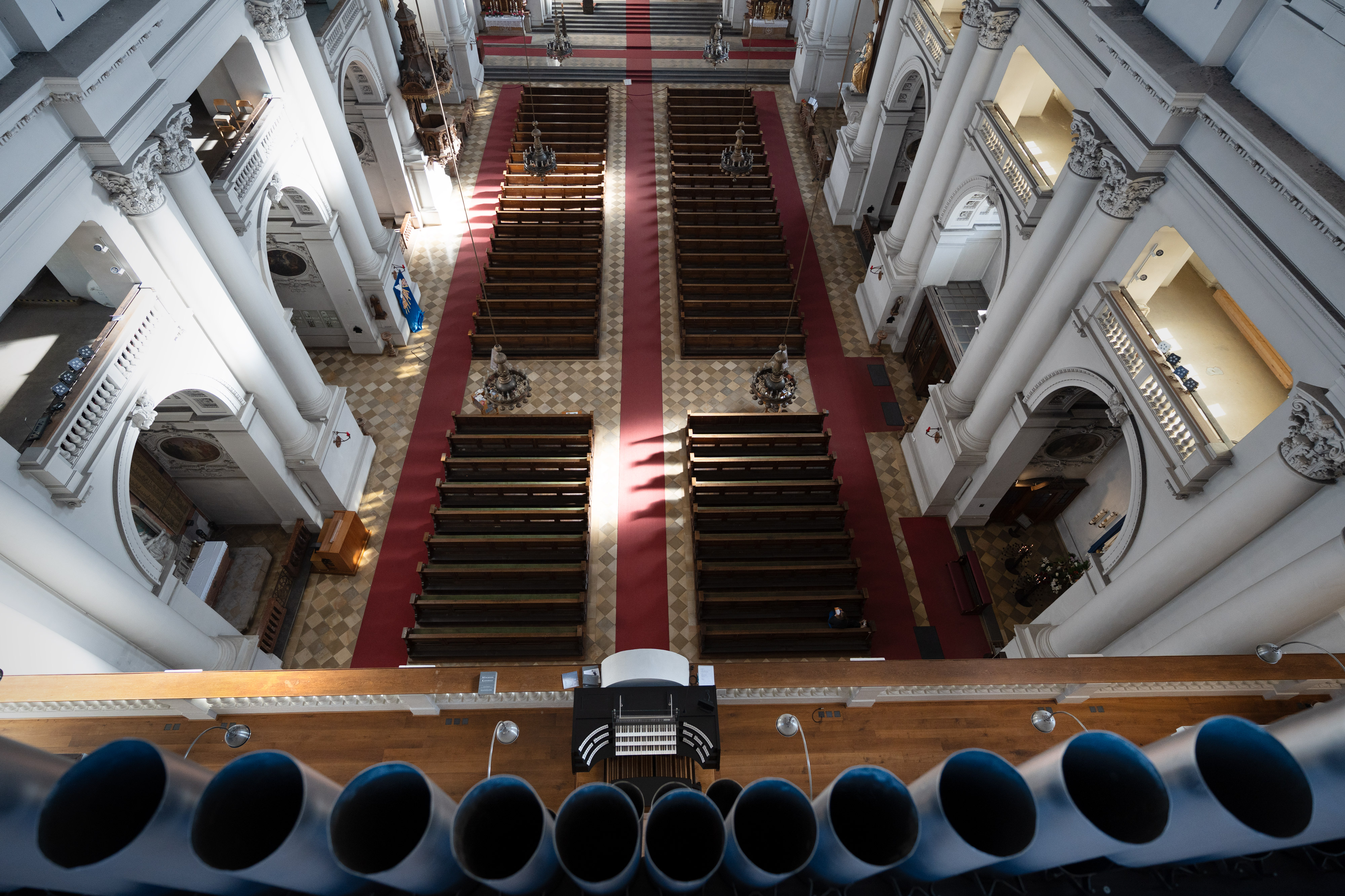
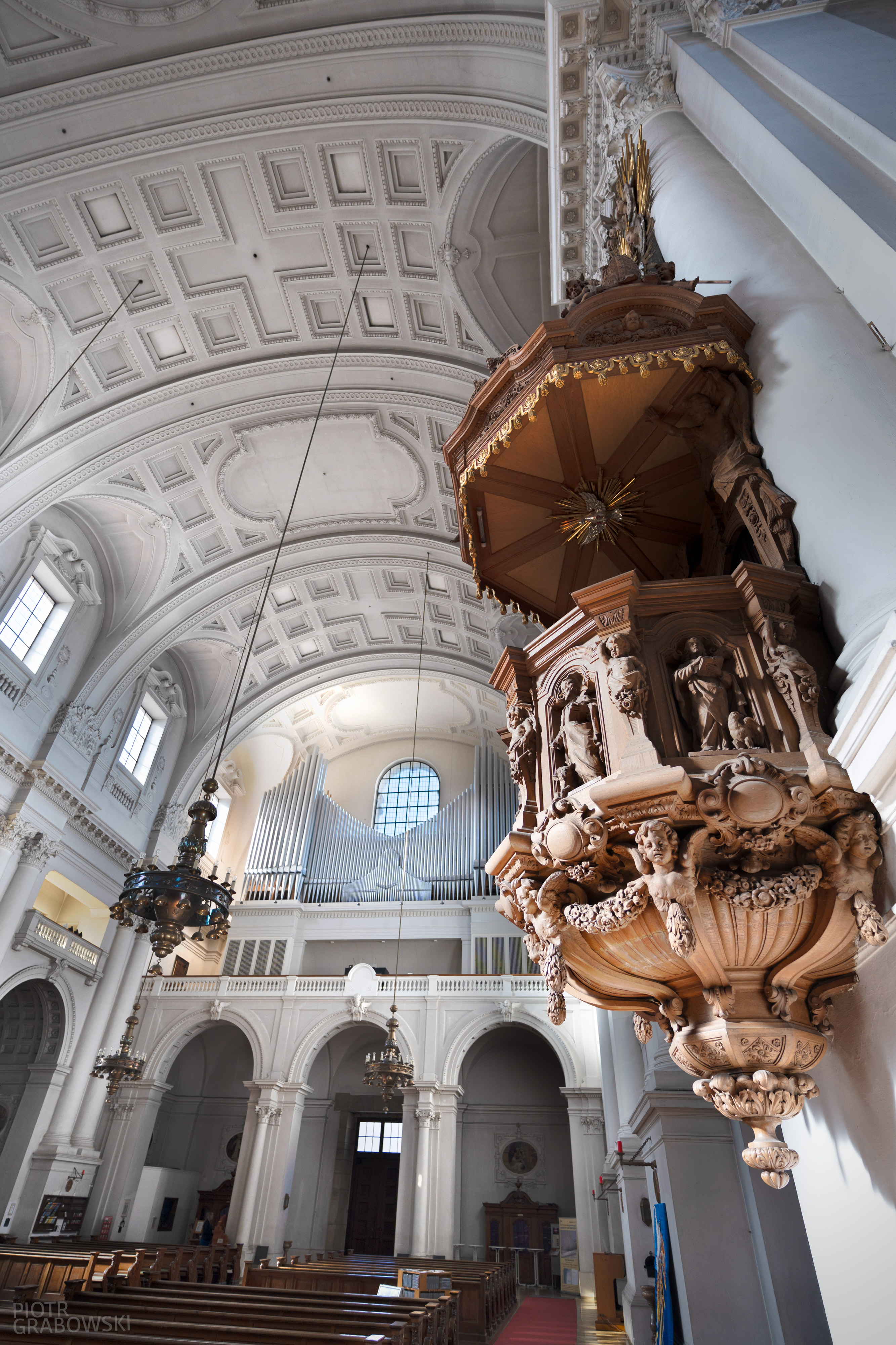
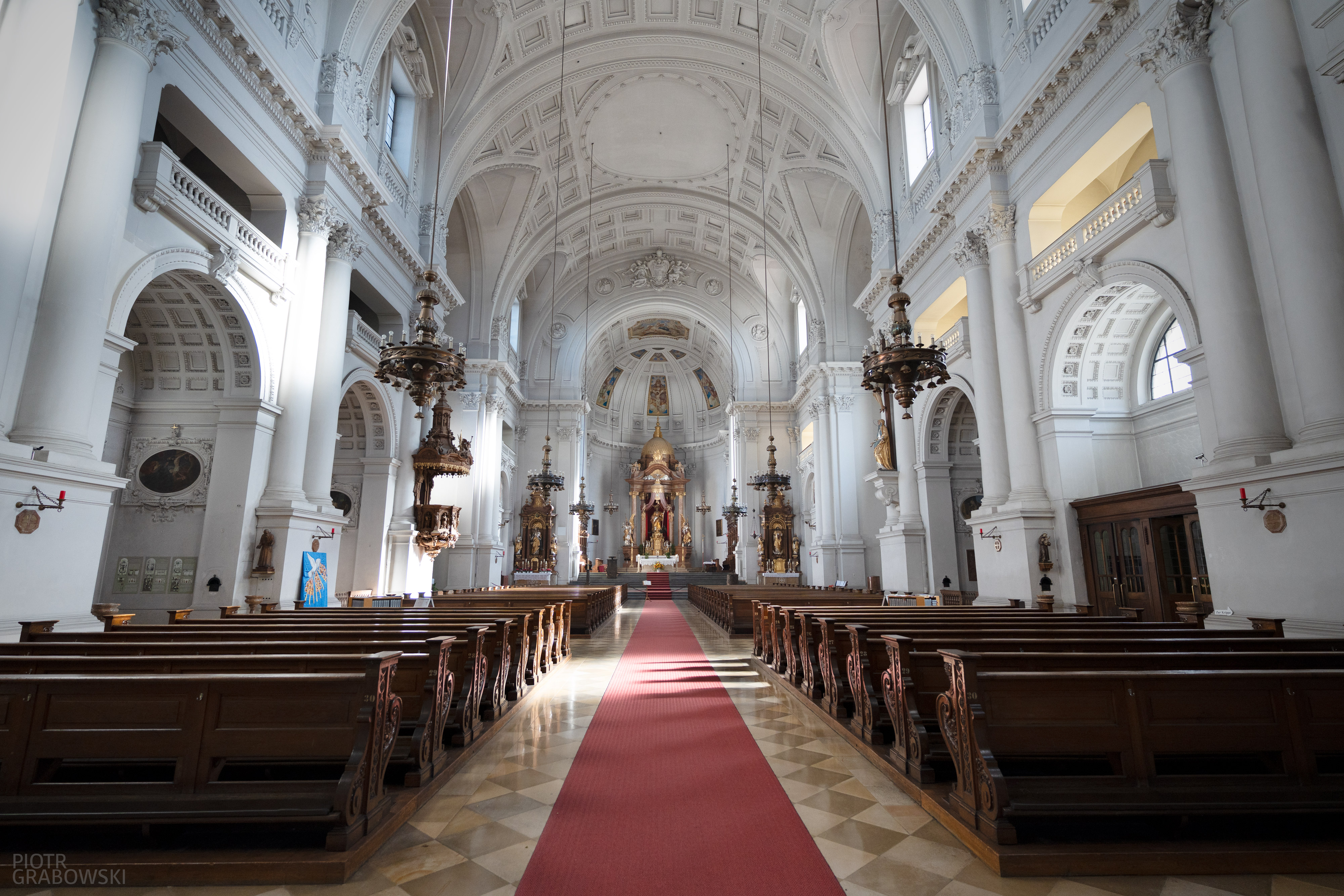
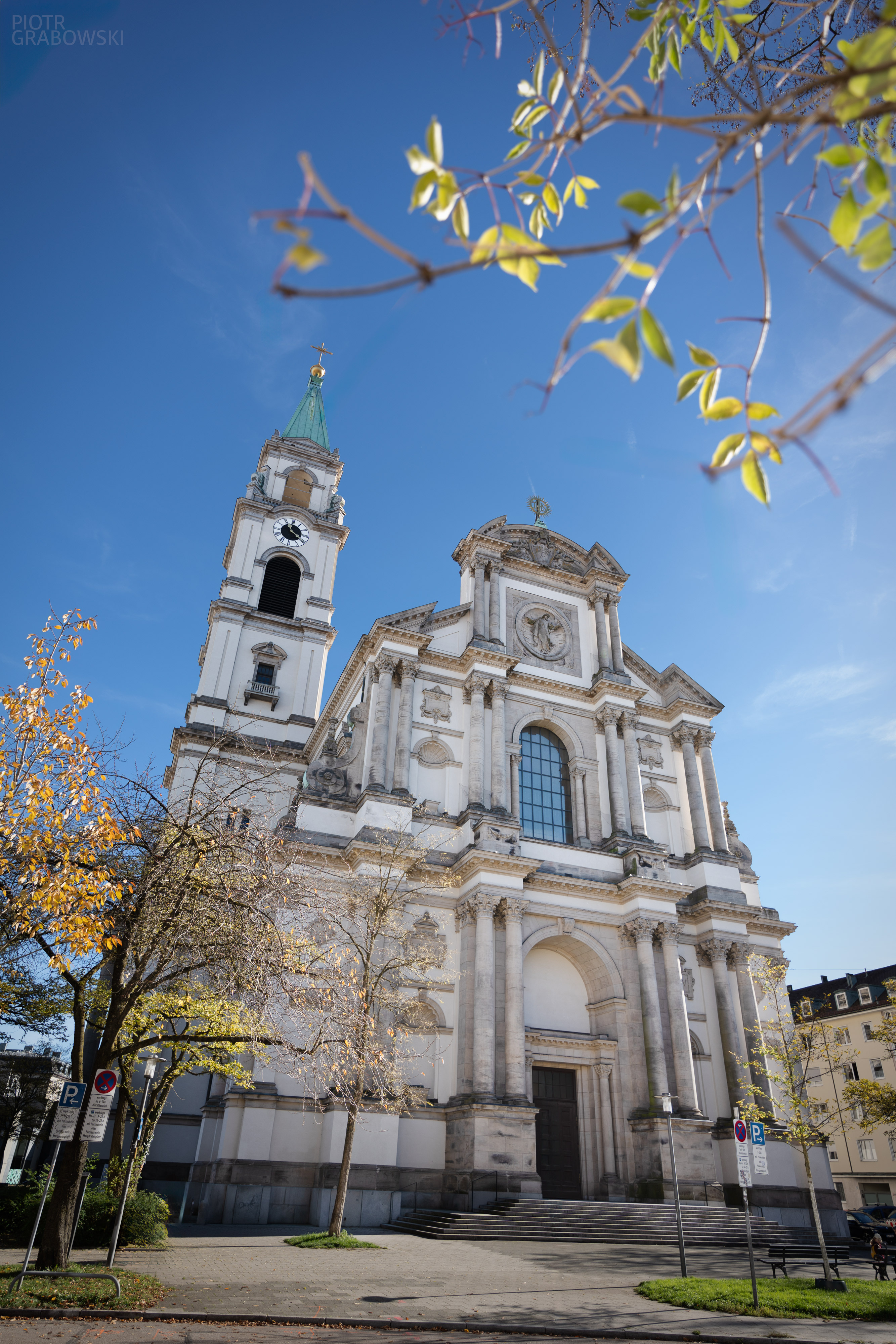
The New Church of St. Margaret (Neue Pfarrkirche St. Margaret) is a large and beautiful church in Munich’s Sendling district. Its spacious interior and elegant architecture make it one of the city’s most impressive churches. Built in the early 20th century to serve the rapidly growing parish, it stands in contrast to the nearby historic Old St. Margaret’s Church. The immense interior provides an exceptional acoustic environment with a reverberation time of up to 10 seconds. Standing proudly on the west gallery is an instrument with an illustrious history, dominated by a striking 32′ façade featuring prospect pipes with a total length exceeding 10 meters.
The organ’s history traces back to a 1915 instrument built by the renowned Munich workshop of Nenninger & Moser. With 56 stops across three manuals and pedal, it held supra-regional importance, deeply rooted in the late-Romantic tradition while embracing the ideals of the Alsatian Organ Reform – blending a warm, velvety tonal foundation with the clarity and colorfulness needed for the music of J.S. Bach. Tragically, the instrument was severely damaged during a bombing raid in 1944. A partial rebuild with 38 stops was completed in 1955 by Anton Schwenk, and later expanded in stages by Wilhelm Stöberl (1970) and Johannes Führer (2002).
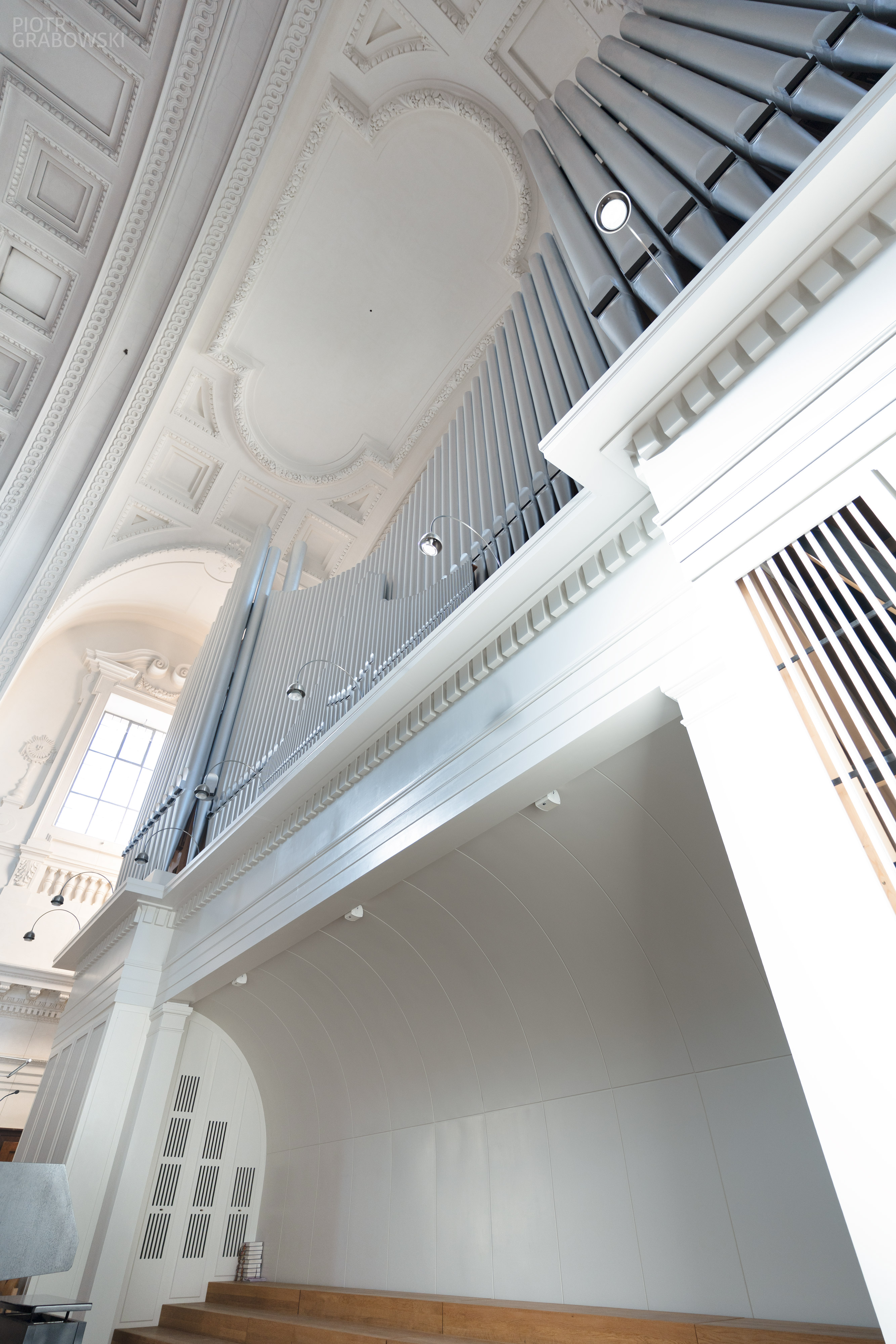
While these successive additions were sonically valuable, they eventually compromised the internal layout, hindering sound projection and maintenance. In 2019–2020, a collaborative team formed by the Munich workshop Kaps and the Bonn workshop Klais undertook a comprehensive re-engineering of the instrument. The entire organ was structurally moved away from the damp west wall to optimize ventilation, stabilize the tuning against temperature differences, and restore a clearly structured layout that resurrected the original, visionary tonal concepts of 1915.
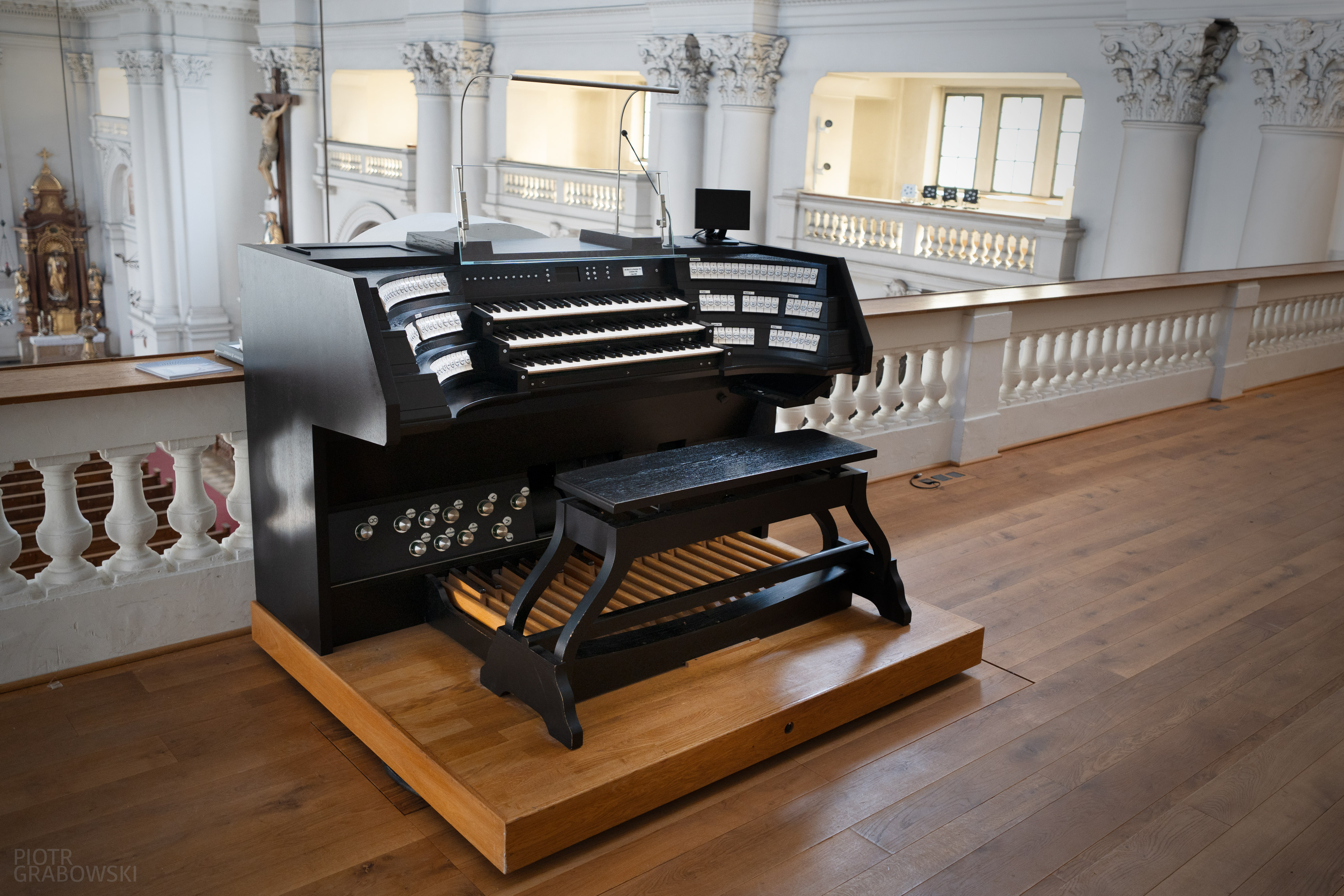
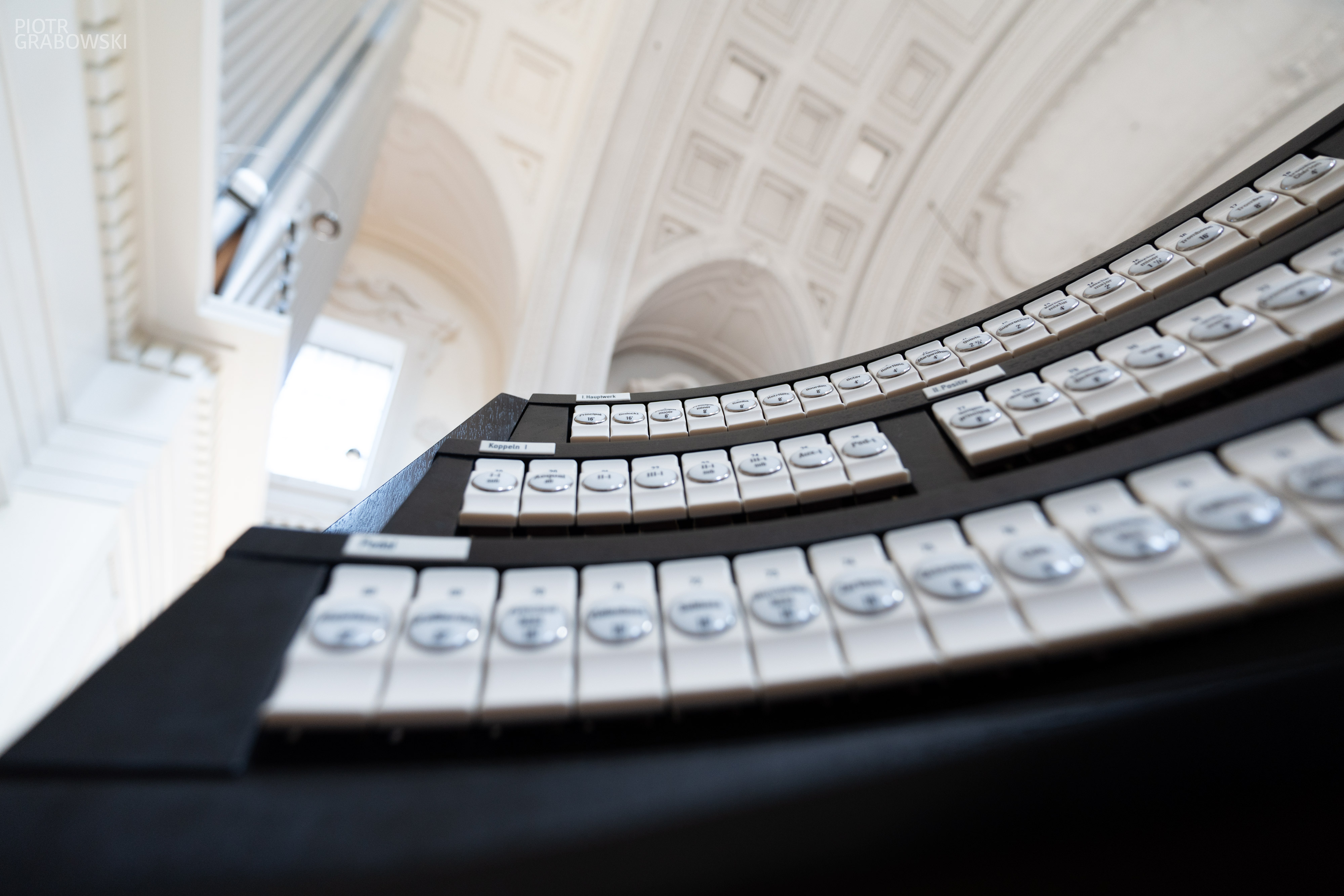
Today, the instrument comprises 74 stops (expanded to 76 stops in the sample set) distributed across five divisions: Hauptwerk, Positiv, Schwellwerk, Auxiliarwerk, and Pedal. This rich disposition allows for an immense variety of registration possibilities, making the organ highly versatile.
The instrument is tuned to a unique, non-equal temperament designed specifically by Klais. Architecturally and acoustically, the floating Auxiliarwerk is located in the top-left section of the case, yielding a beautifully distant sound perspective. It consists of three main ranks: Seraphonflöte 8′, Aliquote II 2 2/3′, and Tromba magna 16′ (with the Tromba pipes standing vertically rather than en chamade). The Seraphonflöte 4′ and 2′ are extensions of the 8′ rank, and the Tromba 8′ and 4′ are extensions of the 16′ rank, while the Cornett stop automatically draws the Seraphonflöte 8′, 4′, 2², and Aliquote II together. Three Trombas from this division have been added to the pedal by default to enhance flexibility.
The Clarinette 8′ in the Positiv is a free-reed stop, equipped with its own dedicated pedal to control its wind supply.
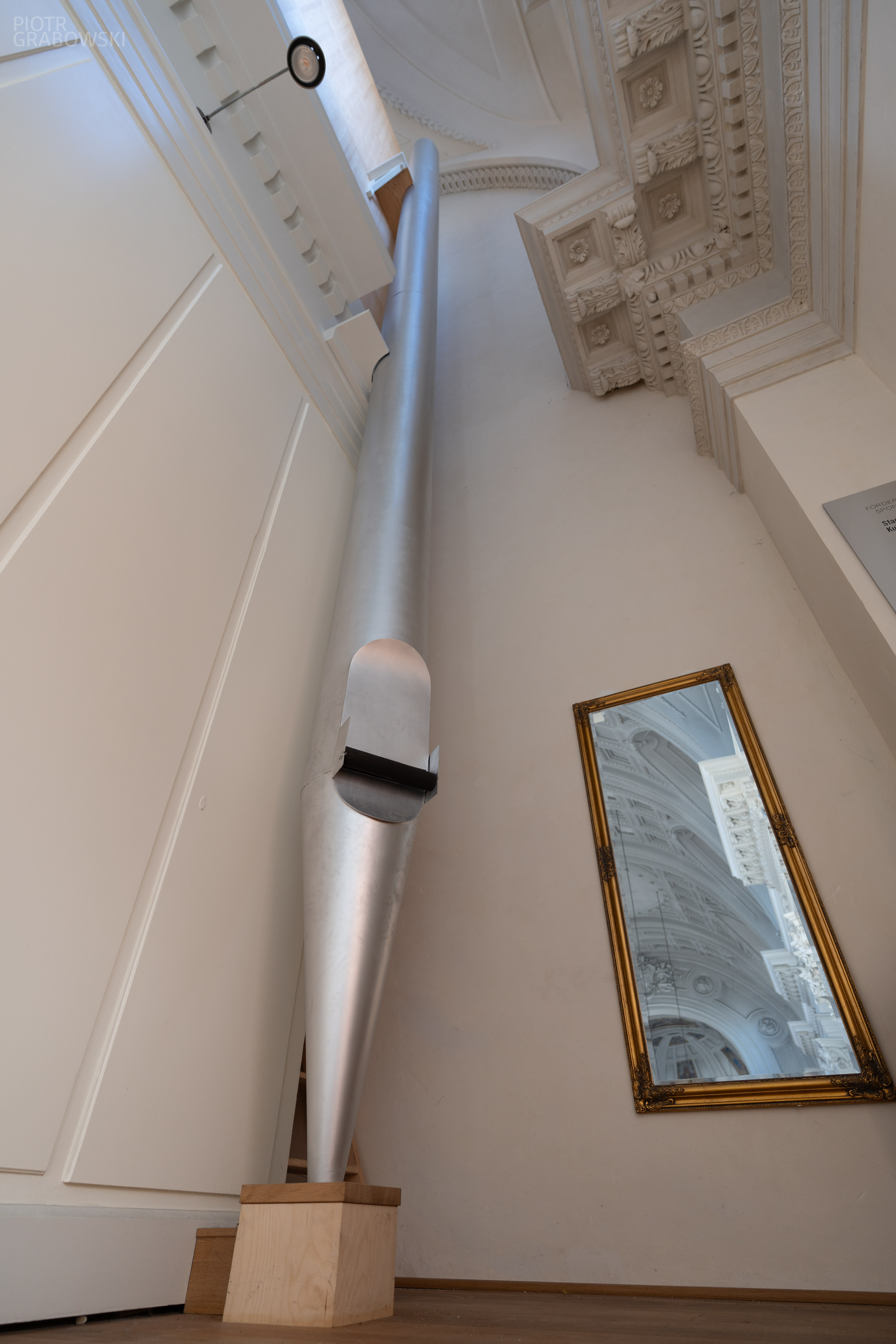
The majestic Majorbass 32′ utilizes the stunning prospect pipes, save for the lowest two notes, which sit on the outer sides of the organ case.
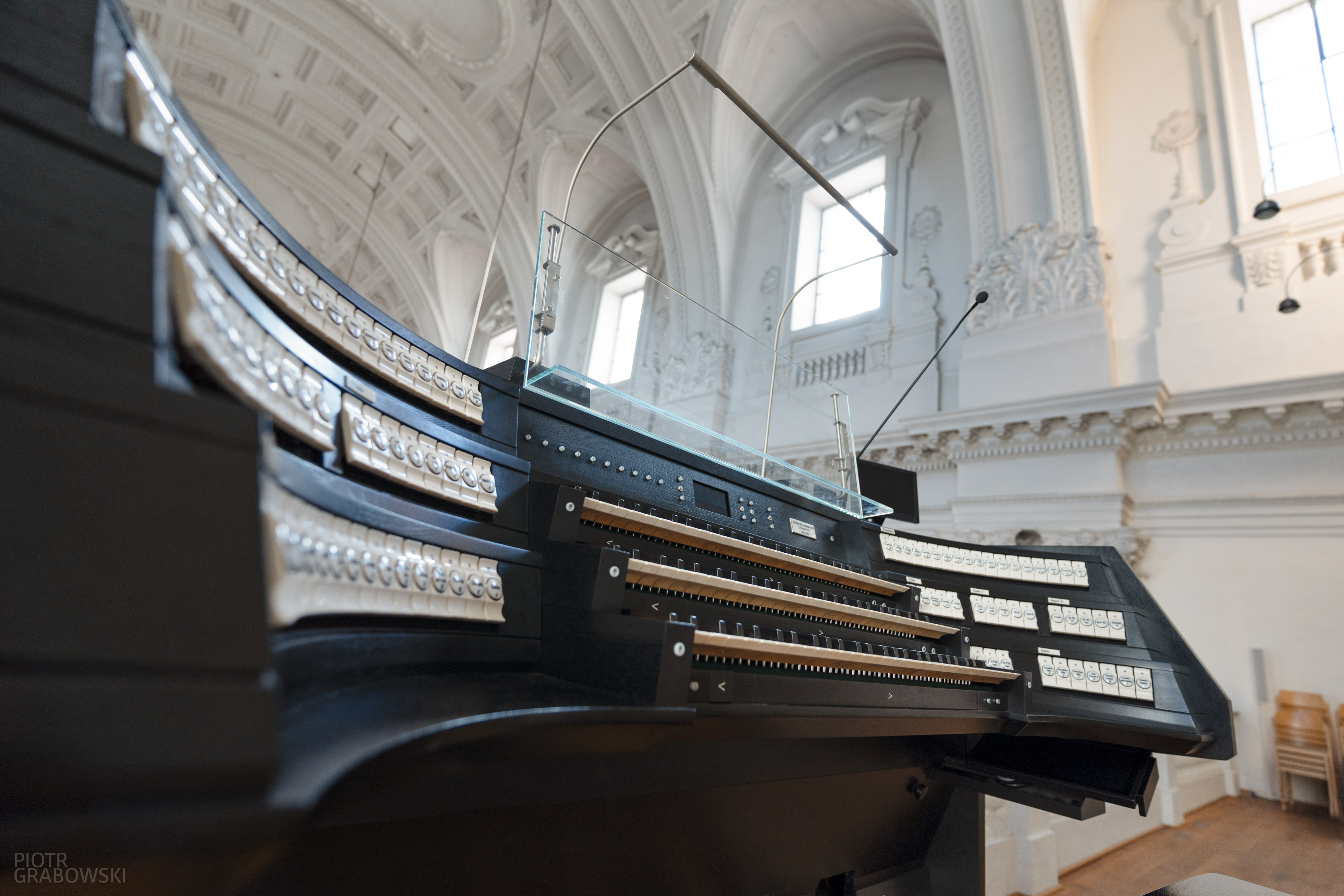
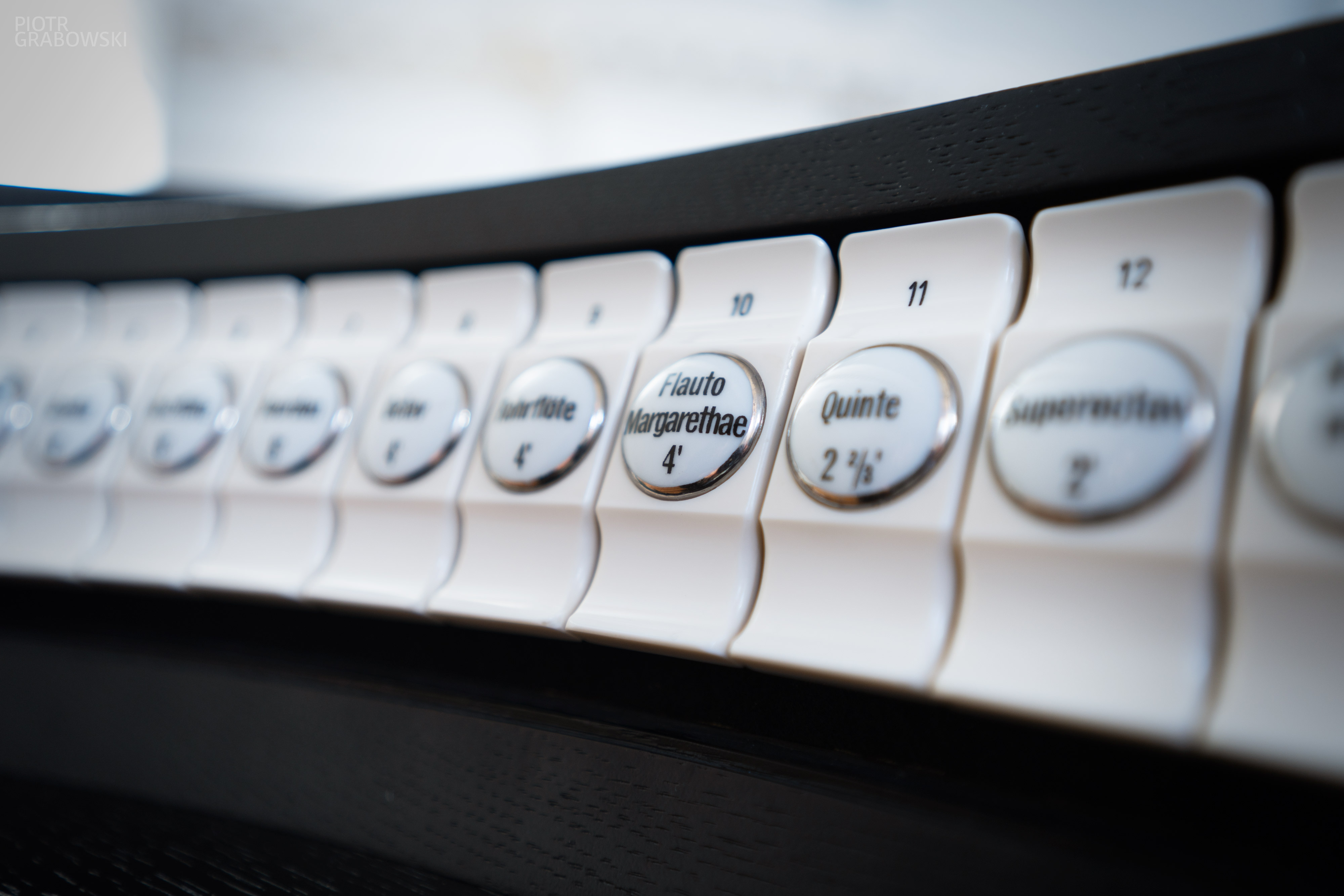
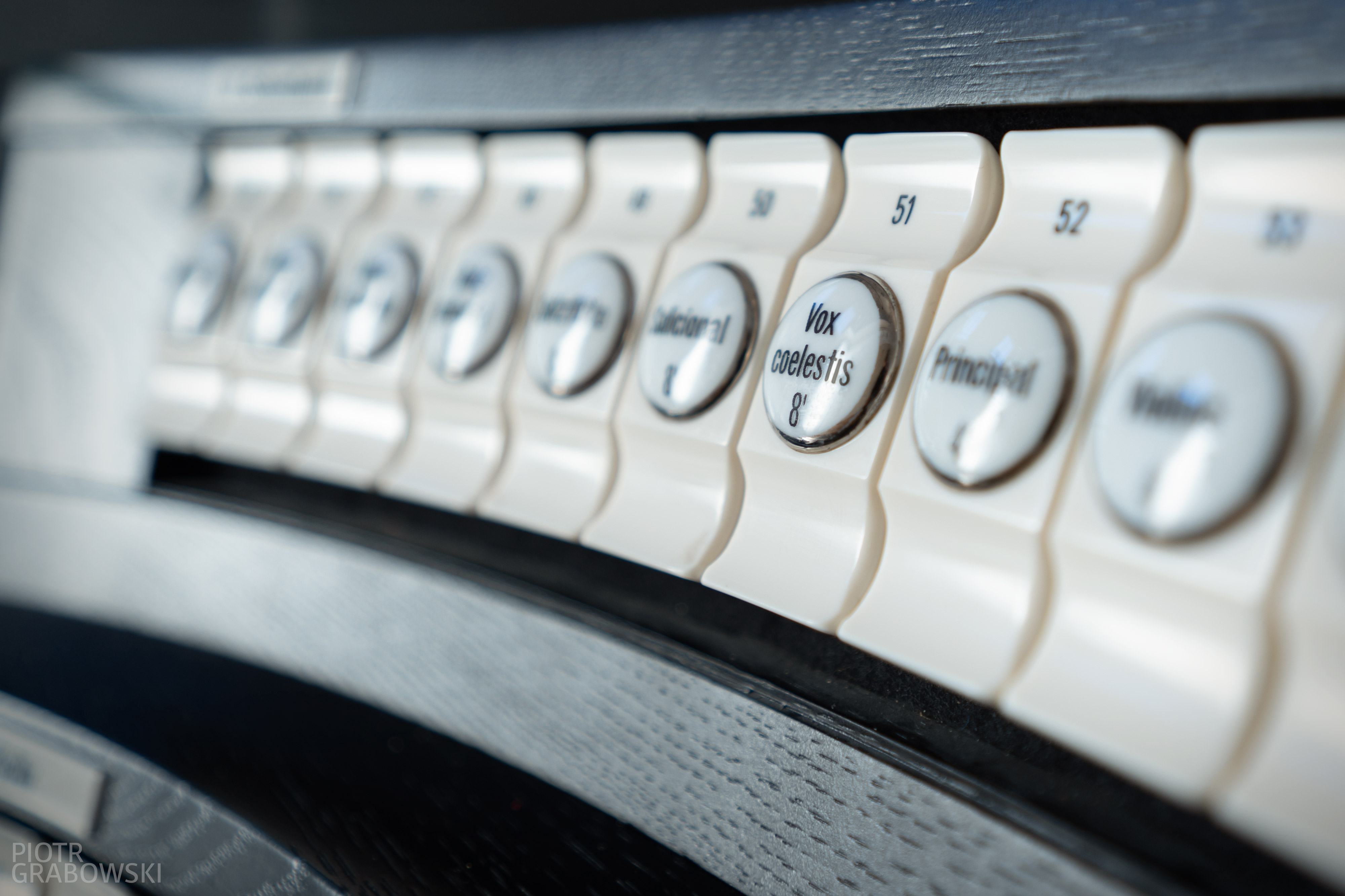
In the physical instrument, several borrowed stops and extended functions (such as the separate Aliquote II stop and specific couplers) are available only from a small LCD panel. For a unified and seamless user experience in the sample set, these functions have been converted into dedicated stop tabs. These include the HW Grossprincipal 32′, HW Violon 16′, SW Contra gamba 16′, P Untersatz 32′, P Grossbordun 32′, P Violquinte 10 2/3′. While the real Untersatz 32′ and Grossbordun 32′ are acoustically derived from the 16′ Subbas and Zartbass, the sample set features an independent Untersatz 32′ made from Subbas 16′.
The sample set has a dedicated “Auxiliar” tab matrix enables independent assignment of each stop to any keyboard – a feature fully integrated into the combination system, though omitted from the Crescendo programming for simplicity. While the original console features three manuals and pedal, the virtual instrument allows the Auxiliarwerk to be assigned directly to a fourth manual if available.
The keyboard compass in the sample set was extended in the manuals, from C-g3 (C2-G6) to C-c4 (C2-C7) and in pedal from C-f1 (C2-F4) to C-g1 (C2-G4).
The organ of St. Margaret is a remarkable example of symphonic organ building and is highly regarded by organists. With its powerful foundation, transparent upperwork, and wide tonal range, it is well suited to both intricate polyphonic music and the expressive demands of the Romantic repertoire.
Listening perspectives
Using this audio player you can listen to different audio channels the sample set is made of.
Use the sliders corresponding for each audio group to modify its volume.
Max Reger - Choralphantasie Wie schön leucht uns der Morgenstern Op.40 No.1 performed by Christian Brembeck
Technical details
Order
Choose which version you want to order. If you want to try the demo first, use the Add to cart button close to Demo version label and proceed to the checkout to get the download link. The only limitation of demo versions is the number of available stops. Click Show demo version button under the stoplist to see the available stops.
Updates
No updates have been released so far.